Rangoli is a folk art specially done on festivals like Diwali or Tihar, Onam & Pongal and special occasions like marriages & functions in home. Another name for Rangoli are Kolam & Mugga. It is an art from India in which patterns & designs are created on the floor using rice powder, flower petals & coloured sand.
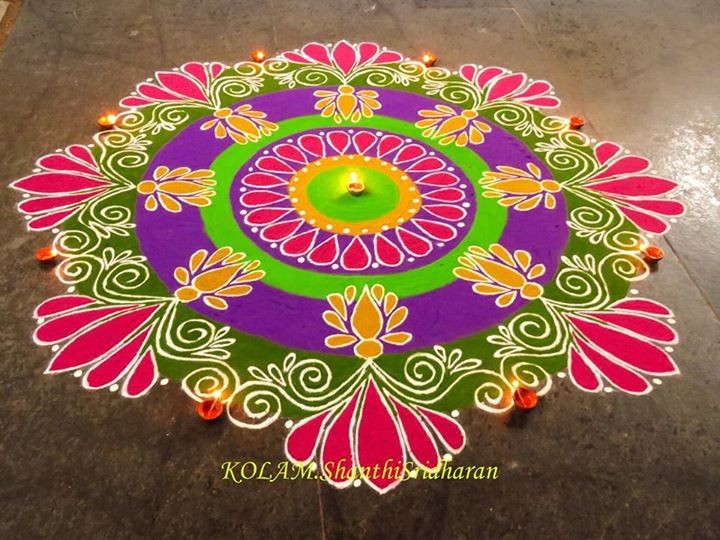
Rangoli is believed to have spiritual perspective. The vibration of rangoli changes with it’s color, design & form. It is usually done to adorn the entrance of home with patterns, design & openwork lace because it is believed that it is a way of welcoming Goddess Laxmi to their home. It is also form of sand painting created using the thumb & forefinger in a steady & continues flow.
Every Indian woman has passed the knowledge of the ritual ground painting to her daughter. Relatively speaking, now in this messed routine of life such things are not seen as before.
Women create rangoli with two key components i.e. concentration & patience which are the major necessity to run a house. Rangoli also reflects the personality of the artist.
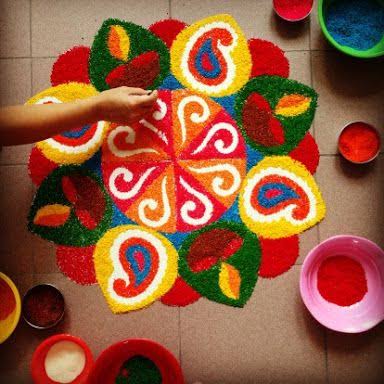
In early time we use to see two to three ladies of house get together & create rangoli early in the morning with all coordination. This was seen on every entrance of house. One the other hand in this ” ROBOTIC WORLD” some people just don’t believe in all this spirituality or I should say they just don’t have time.
Well! If by chance we get to see rangoli then that is also only one in the middle among group of houses on a floor. In old times people used to enjoy & feel the importance & happiness while creating rangoli unlike now people just get ready made stickers & stick them.
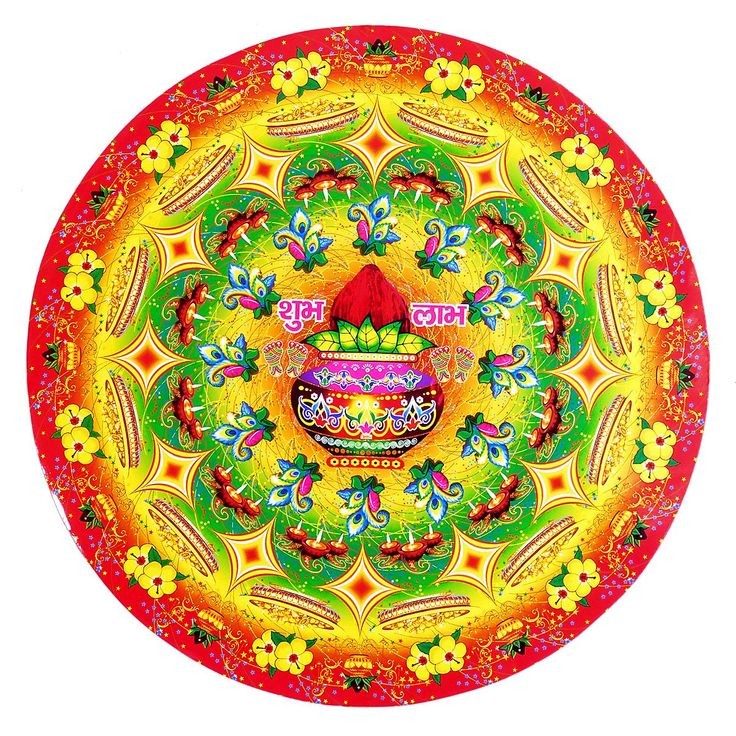
Now people use synthetic colours to create rangoli whereas in early times people used marble powder & sand powder to make a rangoli whole heartedly taking hours and hours. All such things have walked out of our lives.
The joy of making it colourful & making it emphasized by everyone is just blown away around in the wind. Now people have started using pens to colour or to border. They have made it so easy by using rangoli papers containing small holes Just sprinkle the colours & That’s it?
Years ago we could find a notebook where the intricate rangoli drawings were recorded but now such things have just vanished. Open your google, get a design, make it ,Finish Is it so?
In this busy life or I can say in this “REMOTE CONTROLLING CITIES” the knowledge & importance of rangoli is drained out. People have to get the need of doing rangoli & saving our traditional art.
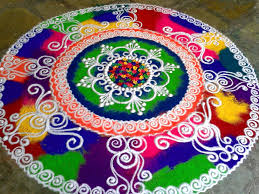
NEED TO FIND OUR LOST ART


 Jhanvi's blog
Very good keep it up.
LikeLiked by 1 person
Amazing 👌😍 . Keep it up.
LikeLiked by 1 person
Superb
Keep it up Janhvi
All the best for future
LikeLiked by 1 person
Too good Jhanvi.. Keep it up.. God bless you…
LikeLiked by 1 person
Hi janhvi very nice article 🌷write every day and read more to sharpen your skill.. good luck and keep it up 💕 looking forward for next update 💕💐🌹
LikeLiked by 1 person
Good initiative 🙂
LikeLike
Amazing
LikeLiked by 1 person
Very nice topic that you have choosen for your first blog keep it up wonderful blog😊
LikeLike
Very well compared.. Gives a brief idea on rangoli.. Keep it up ..waiting for next update
LikeLike
Hey there, Jhanvi,your blog is quite a reminder to us as Indians…..Hope so ….it helps in finding our lost art.And your blog is very nice…Keep it up…!😊 Awaiting for your next blog .
LikeLike
Wonderful blog
I enjoyed reading this blog, also learn what was rangoli also known as , awesome description.😊😊😊
LikeLike
Bro it’s a really to good and best of luck your first blog
LikeLike
Blog is very good bro🤘
LikeLike
Thank u bro
LikeLike
Nice blog.😉
PS: I still do rangoli on Diwali every year🤭.
LikeLike
Beautiful blog i enjoyed reading 😊
LikeLike